Category Archives: sake
The Sake Cellar……worth it?
The pride of any self-respecting wine dude is the wine cellar. Even beer geeks are exploring the possibilities and potential of cellaring. Cellaring being the idea of putting aside a few bottles that will “reward with time”, ie. mature into a more complex and interesting beast. A practice most familiar to the wine world. So how does sake fare after a few years in the cellar?
Usually, not too well. Firstly, the compounds in wine that give it the ability to age are either not present at all or not present in a large enough capacity to enable effective ageing. Tannin is essential to the ageing process of red wine, coming from the grape skin, vine and the barrels used for maturation. In white wines that have the ability to age, a good acid level is required. Sake contains no tannin and has far less acidity than white wine leaving it at something of a disadvantage to start. So why do it? And does anybody drink it?
It seems the answer is “yes”. Ageing sake has been done for many years and there are quite a few breweries out there that make ko-shu 古酒 (old sake) or choki jukuseishu長期熟成酒 (long term matured sake). It is out there but it isn’t particularly common. However, a recent article on a popular Japanese news site hints at a possible renewed interest in aged sake. The article refers in particular to a bar in Osaka called Jukuseikoshu Bar Quon (try saying that after a few glasses of sake). A bar that has found its niche with a menu of around 10-20 aged sakes. Fans of the old brew refer to the soft rounded flavours and the reduced effects of hangovers(?). For now, I’ll hold off on my skepticism regarding reduced hangovers but round, smooth flavours I can understand. I should admit I haven’t had a lot of aged sake. At least not a lot of sake that was meant to be aged. Unfortunately, the sake you find on the bottleshop shelf is often koshu by default. Buying sake for consumption at home doesn’t seem to have quite taken off in Australia yet, so till then check the dates on the bottle when shopping about.
Dates? Did somebody say dates? Yes, if you check out the bottle of sak e nearest you, you will find a date printed somewhere on the bottle or label that specifies the day the bottle was shipped. Most sake is stored at the brewery until they think it’s ready, so the date reflects when it left the brewery as opposed to when it was bottled.
So what can you expect from aged sake? It depends on whether it is koshu that has been designed by the brewery to be drunk as an aged product or whether it is sake that was probably intended to be drunk fresh but has been kept for a while and has become old sake. Deliberately aged koshu can often have sherry like aromas, a dessert like sweetness and woody aromas. They can be delicious and rewarding. Sake that is just plain old can be a funky, dull and show aromas and flavours more resembling cooking sake. but in my opinion, if you are looking for what makes sake great-drink it fresh. Within a year is best but given the slow turnover of sake in Australia two years sometimes has to be settled for. I guess what I’m getting at is there isn’t much point getting hung up on ageing sake. Age your wines by all means but drink your sake as quick as you can. A sake cellar sounds nice in theory but keep the turnover high. Ask a brewer and you’ll find almost all of them will recommend you drink their sake fresh. If you’re concentrating on ageing and what will cellar well, you’re missing the point.
So if you spot something labelled as koshu, by all means give it a go, but anything else I’d be drinking up as quick as you can; just how the brewer wanted you to.
Philip Harper and Tamagawa
At some point in the discussion of sake with anyone with a passing interest, the name Philip Harper pops up eventually. For those that aren’t familiar, Philip Harper is Japan’s only non-Japanese toji (master brewer). An Englishman who developed a taste for the rice brew early on in a stint in Japan teaching English around twenty years ago. What started with a job helping out at a local brewery when time permitted eventually led to a full-time job which then led to work with some more breweries, further study and now his status as master brewer for Kinoshita Brewery in Kyoto.
While Mr Harper’s unique position as Japan’s only ever foreign toji is worthy of praise as a testament to his tenacity and determination to succeed in a profession steeped in a tradition not so open to outsiders, it isn’t defining. The sake Philip is producing is not the sake of a foreigner trying to change the rules or put his own British spin on things. Fortunately, it is the sake of someone who has obviously learnt the craft as any Japanese would have, resulting in sake of true quality, depth and style.
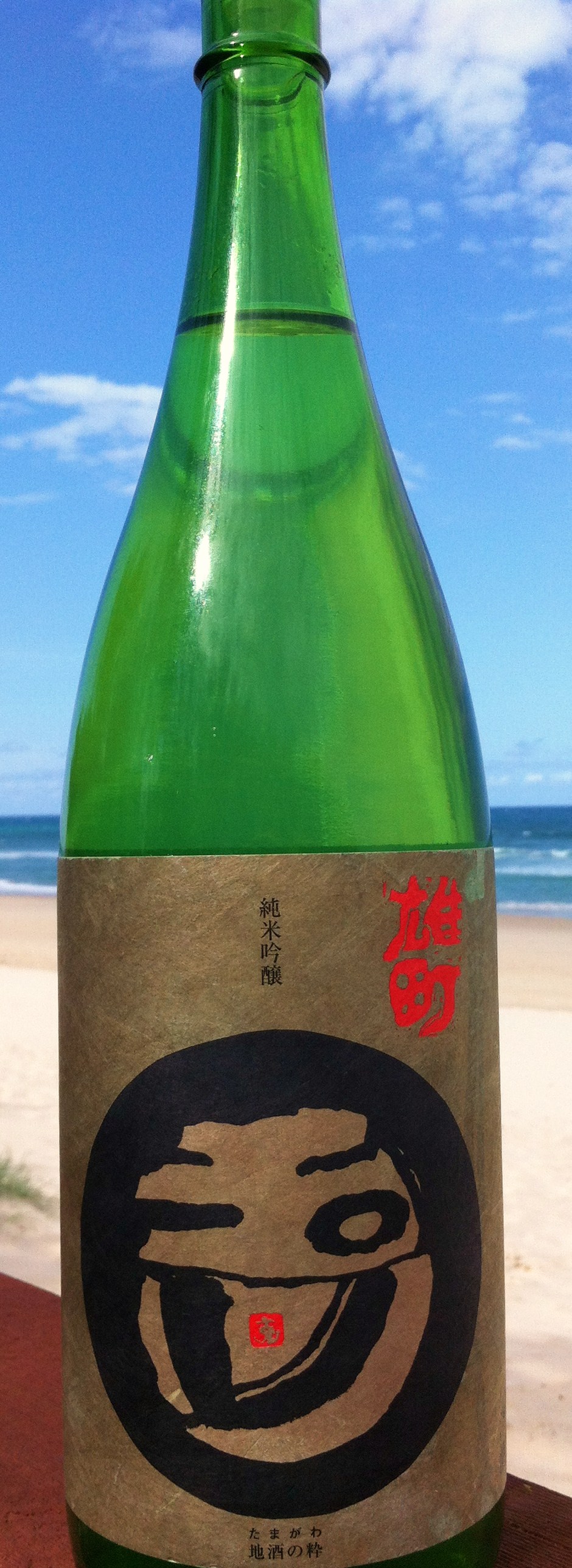
The Tamagawa Junmai Ginjo I’ve been ploughing my way through these last few days is an almost rustic brew. It doesn’t have the showy, fruity ginjo nose that can be apparent in some ginjos. Instead, it shows woody aromas, floral hints, touches of dry autumn leaves (don’t laugh, I know what I mean) and soft earthiness. On the palate its soft acidity make it a very smooth, elegant, easy drink quite rich in umami. This particular sake is made using Omachi rice. Not an uncommon rice variety, but not the most popular either. I find it often to be quite distinctive in that sake using this variety often have an almost chestnut-like aroma and taste. Not exclusive to omachi but for me, common.
Also interestingly, this sake fares well slightly warmed. Now, I know I may have said ginjo should be drunk chilled; and for the most part it should, but a little warmth softens the edges giving a feeling of a buzzed nirvana (too much?).
Philip Harper has been instrumental in getting sake out and about in the English speaking world, authoring a number of books well worth reading if you come across them (which can be difficult in Australia). In the meantime hunt down some Tamagawa sake and see what happens (or more correctly and thankfully doesn’t happen) when a non-Japanese brews it.
Stats: Tamagawa Junmai Ginjo Kyoto
Seimaibuai: 59% Omachi rice
Rashomon Junmai Ginjo
On a recent trip to Japan I stumbled across this little gem from Wakayama in a very small liquor store in Osaka. Oddly, on this occasion I wasn’t even looking for sake. I was a little peckish for some good beer snacks but when I saw what I figured was an homage to the great film director Akira Kurosawa in sake form, how could I resist. 
For those that aren’t familiar, Rashomon is the film that brought director Akira Kurosawa to the world’s attention as a serious contender in the international film industry. In particular the style of story telling in the film was something not seen before but has been imitated many times since. Now, I’m no movie critic so I won’t babble on too much about the film but let me just say, if you haven’t seen it – see it!
I wondered if it was just a coincidence but after checking out the website for Tabata Shuzo, the makers of this sake, it turns out the sake was indeed named after the film. Just as Akira Kurosawa reached a wide international audience with Rashomon, a former company president also hoped to break the boundaries with their sake. Well, with the rare honour of having a woman leading the brewing, boundaries are definitely being broken.
The good news is, this is no novelty sake. It pours with a clear, water-like consistency. The nose is led by aromas of pear and melon with a slightly funky background. There is a touch of pepperiness but overall it’s a fat, luscious mouthfeel with a moreish aftertaste. There’s some weight to the body which lends itself to its junmai pedigree but the overall balance is what makes this a very cool sake indeed. It has the weight to man-up to a variety of foods, especially umami-rich foods like scallops, but drinks great just on its own too.
Unfortunately, as far as I know, this sake is not available in Australia. However, it’s a fantastic sake with an interesting back-story I thought. So, in the words of Ferris Bueller, “if you have the means, I highly recommend picking one up”.
By the way, they also have a sake called Seven Samurai also named after another Akira Kurosawa classic.
Stats: Rashomon Junmai Ginjo Wakayama Prefecture
Seimai Buai: 59% Yamadanishiki Rice
Hot Or Not
 Alright, let’s confront the sake slurping elephant in the room.
Whenever the topic of sake comes up the first discussion is usually whether to drink it hot or chilled. And I’m here to tell you that like many things sake (and Japanese for that matter) there is no clear-cut answer. What I can tell you though, is both have their place.
Most people have probably had their introduction to sake through hot or warmed sake (incidentally called O-kan in Japanese). Then, at some point you may have met someone who proclaimed that no longer is it necessary to drink sake warm, it should be drunk chilled. Why? Because sake of days gone by was of a lesser quality and a bit rough, warming it up covered those flaws making the sake more palatable. Now, this is partly true. No doubt the sake making techniques in the old days were not as refined and calculated as they are today. Sake of old was not as aromatic and would’ve been gritty and nutty. The lack of refining techniques probably left some musty type flavours that magically disappeared when the sake was heated. Also, early sake was stored in cedar barrels which would also have contributed to a duller flavour profile. While these may be contributors, it’s not the only reason for warming sake. One glaringly obvious fact is that refrigeration as we know it didn’t exist until the last 150 odd years. Use of ice and snow for refrigeration did exist in some cultures but it was used mostly as a means of preservation of foods. In years gone by, food and drink was taken warm. One reason being it was considered healthier. So, to say sake used to be drunk warm to cover up flaws isn’t entirely correct. Chilled sake was occasionally drunk but warm was considered the standard.
 Now, in the case of modern sake, the ginjo style (refined, elegant and aromatic) has only really been around commercially for the last forty years or so. And in fact most of sake’s major technical breakthroughs have occurred in the last 100 years. The development of better rice milling machines for example, enabled brewers to start accurately milling to levels never done before. Along with other factors such as the development of new aromatic yeast strains and cultivating new hybrids of sake rice, this lead to a trend of lighter, aromatic more complex styles of sake that are better appreciated slightly chilled like a white wine.
However, keep in mind there are still breweries out there making sturdy old school sake. Sure, they are making it better than it would have been made a few hundred years ago but it’s still old school. I often find that some of those ricey, chewy junmai (pure rice) sakes can lack in the aroma department when chilled and tend to be a little dull. But give em’ a bit of heat and they can come alive. Notice I say a bit of heat. You don’t want to be serving sake at scalding temperatures. Just warmed, around 40 degrees is nice.
Another thing to take into account is climate. Here in Queensland I don’t often feel the hankering for warm beverages. However, those in cooler areas may find a slightly warmed sake on a cool evening to be quite lush. Japan’s winters can be brutal so it’s little wonder that the tradition of warm sake has held on.
So, it’s probably fair to say when it comes to nama sake (unpasteurized sake that is lively, fresh and zippy), ginjo and definitely daiginjo sake, chilled is the way to go. Honjozo and junmai are also likely to be good chilled but may work warmed depending on the sake. It can simply be a matter of trial and error. The good news is that many breweries put a little guide on the back label of their sake with serving temperature suggestions. As for the cheap nasty stuff? Heat it up.
Ordering in restaurants can be tricky. Sadly, I find a lot of staff (in Australian Japanese restaurants) don’t know their product and will happily offer to serve sake warm or chilled regardless of the sake. If they are strongly recommending you drink their sake warmed it’s sometimes because they know it’s nasty and heating will cover it up. Don’t be afraid to ask your server why they recommend heating. If you’re unsure, usually it’s safer to order the sake chilled and then if it isn’t happening for you ask them to warm it up.
My cup runneth over….
Well, it certainly will if you use those tiny cups the Japanese traditionally use.
Like most things with sake there are a few myths and misunderstandings surrounding the presentation and rituals of sake consumption. 
Firstly, what are those little shot glasses and why use them? The cups in question are called o-choko. The flask used to pour sake is called tokkuri. The reason behind the small size cups is a social one. Traditionally in Japan it is considered impolite to pour one’s own drink. Therefore if you have a table of people sitting around drinking you will see each person taking turns to fill another’s cup. If the cups are small they will require constant refilling thus, creating a lively social atmosphere. The tokkuri is used for heating sake and if you aren’t drinking warm sake there is no need to transfer your sake from the bottle to the tokkuri just to then pour it in your glass. And while we’re on the topic, just because it’s in a glass the size of a shot glass does not mean you should “shoot” it. Now, make no mistake if you have ever been to Japan and found yourself drinking in this kind of situation you’ll know it really is quite a warm and friendly way to share a few drinks and it also helps conversation flow.
However, I’m not Japanese and I’m not in Japan and I’m guessing most of you aren’t either. In that case there is really no need to follow this protocol. In fact, even in Japan in most sake bars this style of drinking is quite rare. Reason being, these days most people order sake by the glass and not the bottle. This is where our next drinking vessel comes in; the guinomi.
Guinomi can be a little vague but it is simply a larger cup or glass. They can vary in size from not much bigger than o-choko to whiskey tumbler size or so. It can be made from glass, clay or ceramic (anything really) in any shape or design. They can often be quite rustic in appearance and are actually my favourite style of drinking vessel for sake.
 You may have also seen those wooden (sometimes laquered) square boxes used. Called masu, these are made from cedar and are often used in ceremonies such as weddings for a bit of pomp, but seeing as the cedar tends to impart some aromas and interfere with the flavour of the sake they aren’t all that practical. They do look cool though.
These days it is also quite common in some of the more fancy Japanese restaurants to serve sake in wine glasses. And why not? Simple white wine glasses can be excellent for capturing the fine aromatics of a ginjo sake. And the added bonus is, most people already have these at home. Renowned Austrian wine glass producer Riedel actually makes a daiginjo glass (unfortunately not available in Australia) that works wonderfully but is by no means a necessity. So never feel the need to put off drinking sake at home till you think you have the right hardware.
It’s important to remember that when it comes to sake presentation, there are no rules. Even if you hear someone say in some Japanese restaurant that “this is the way it’s really done” – it’s not. It’s just their way. There are many ways to serve sake using many different cups and glasses and not one of these is the officially recognised “way” to do it.
So, experiment see what works for you and for the sake you are drinking. You’ll probably find ginjo and daiginjo sake work well in the wine glasses and some of the less aromatic ones work fine in a guinomi style cup. There’s only one way to find out…. 
You may have even seen these janome (snake’s eye) cups before. These are used in official sake tastings in Japan. The contrast of the cocentric blue circles with the white helps check the colour and clarity of the sake. Again, fun but not a necessity.
First things first…
So, here’s the thing; I love wine. I also love beer. Quite a bit in fact.
Everything has it’s time and place. A celebratory moment calls for Champagne. A cold beer on a hot summers day is hard to beat. And a glass of red in front of the telly on a cool evening is time well spent. So where does sake fit into all this? For most, the answer would be, when dining at a Japanese restaurant. While that is a good answer it isn’t the only answer.
Sake unfortunately suffers from what I call “dining tourism”. This is the social phenomenon where people subconsciously feel the need to only indulge in certain beverages when they are consuming food from that beverage’s origin. You see it everywhere. Drinking Kingfisher beer in an Indian restaurant, margaritas and Corona in a Mexican, Guinness in an Irish pub, sangria in a tapas bar and of course sake in a Japanese restaurant. Wine on the other hand magically crosses all borders and is drunk anywhere there is food. So why not sake? Answer is probably because no one has tried it.
Make no mistake, I believe all beverages have their limits. If you’ve ever tried sake with hot chilli or spiced food you’ll soon find its Achilles heel. However, beer with sashimi is just wrong and white wine with oysters is something I’ve never quite understood. There are some areas where sake will go just as well if not better than wine. I stand by that 100%. And that’s what it’s all about, finding that perfect food match or a match for the situation, the moment. Have a bottle of sake in the fridge (yes, the fridge) on stand-by and give it a go one day when you might normally have gone for wine or beer. You might be surprised at just how approachable and adaptable sake can be.
Of course, there will be times when beer or wine will be the preference, but it doesn’t hurt to experiment and try something new. If you’re lucky enough you might become just as obsessed as me.

 saké australia